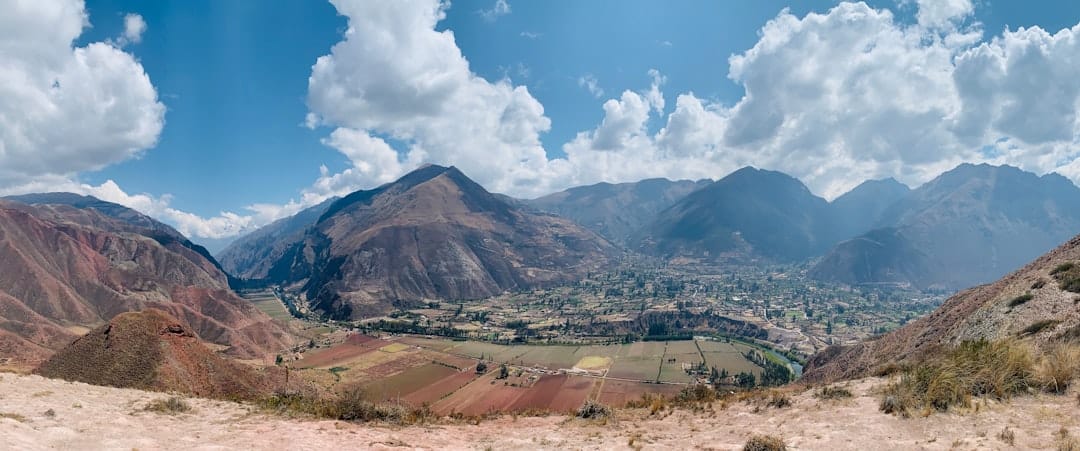
Sacred Valley of Peru

Peru Family Visa

Peru's Family visa (Visa Familiar) allows immediate family members of Peruvian citizens and legal residents to obtain residency in Peru. Spouses, minor children, and parents of Peruvian nationals are eligible to apply for this visa category.

6-8 weeks
Last Updated: February 2026

Why Choose PeruVisas?

English-Speaking TeamYes
Countries Served50+
Processing Time6-8 weeks
Full SupportYes

Requirements Checklist

Proof of family relationship (marriage certificate, birth certificate, or adoption decree)
Valid passport with at least 6 months remaining validity
Criminal background check from your country of origin (apostilled)
Peruvian family member's DNI (national identity document) or Carnet de Extranjeria
Completed visa application form (Formulario F-004)
Four passport-sized photos (white background, recent)
Health certificate from a licensed physician
Proof of health insurance valid in Peru
Proof of financial means to support the family member (bank statements, employment letter)
All foreign documents apostilled and translated into Spanish by a certified translator

Key Benefits

Legal residency in Peru based on family ties
Path to permanent residency after 2 consecutive years (for spouses of Peruvian citizens)
Access to Peru's healthcare system
Ability to apply for a separate work authorization
Children can enroll in Peruvian public and private schools
Open bank accounts and access financial services in Peru
Spouses of Peruvian citizens may apply for Peruvian nationality after 2 years of marriage and residency
Dependents under 18 receive automatic coverage under the family unit

Who Qualifies for Peru's Family Visa?

Peru's Family visa, officially the Calidad Migratoria Familiar, provides a pathway to residency for foreign nationals with close family ties to Peruvian citizens or legal residents. Administered by Migraciones, this visa category recognizes the importance of family unity and offers a relatively streamlined process compared to other visa types.

The following family relationships qualify:

  • Spouses of Peruvian citizens or legal residents
  • Minor children (under 18) of Peruvian citizens or legal residents
  • Parents of Peruvian citizens
  • Adopted children with legally recognized adoption decrees
  • Guardians of minor Peruvian nationals (in specific circumstances)

The sponsoring Peruvian family member must be either a citizen holding a DNI (Documento Nacional de Identidad) or a legal resident holding a valid Carnet de Extranjeria.

Marriage Requirements

For spouses, the marriage must be legally recognized. If you married outside of Peru, your marriage certificate must be:

  1. Apostilled by the competent authority in the country where the marriage took place
  2. Translated into Spanish by a certified translator (traductor certificado)
  3. Potentially registered with RENIEC (Registro Nacional de Identificacion y Estado Civil) for full recognition in Peru

If you plan to marry in Peru, the process involves:

  • Both parties presenting identification documents (passport for foreigners, DNI for Peruvians)
  • A criminal background check for the foreign partner
  • Publication of the marriage announcement (edicto matrimonial) for at least 8 days
  • A civil ceremony at the municipalidad (municipal office) in the district where either partner resides
  • Payment of municipal fees (typically 50-200 PEN depending on the municipality)

Religious ceremonies do not have legal standing in Peru for immigration purposes. Only the civil marriage registered with the municipality is recognized by Migraciones.

Dependent Children

Foreign children of Peruvian citizens are eligible for the Family visa, and the process is generally straightforward:

  • Biological children: The birth certificate must show the Peruvian parent's name. If born abroad, the birth certificate must be apostilled and translated.
  • Adopted children: The adoption must be legally finalized and recognized in Peru. International adoptions must comply with the Hague Convention on Intercountry Adoption.
  • Children under 18: Automatically qualify as dependents.
  • Children 18 and older: Adult children generally do not qualify under the Family visa category and must apply for their own visa under a different category.

If both parents are not present in Peru, the absent parent must provide a notarized authorization letter permitting the child to reside abroad. This is a standard requirement to prevent international child abduction.

Document Requirements in Detail

The document preparation process is one of the most important aspects of a successful Family visa application. Here is what you need and how to prepare each item:

Proof of Family Relationship

  • Marriage certificate (for spouses)
  • Birth certificate (for children or parents)
  • Adoption decree (if applicable)
  • All must be apostilled and translated

Criminal Background Check Obtain this from the relevant authority in your country of origin (FBI for U.S. citizens, ACRO for UK citizens, RCMP for Canadians, etc.). The check must be recent (typically within 6 months), apostilled, and translated into Spanish. Some countries allow you to request the check from abroad; others require you to be present.

Sponsor's Documentation The Peruvian sponsor must provide:

  • A copy of their DNI or Carnet de Extranjeria
  • Proof of financial means (employment letter, bank statements, tax returns)
  • Proof of address in Peru (utility bill, rental contract, or property title)

Health Certificate A general health certificate from a licensed physician confirming you are in good health and free from communicable diseases. Some applicants obtain this in their home country before traveling; others get it from a Peruvian clinic after arrival.

Passport Photos Four recent passport-sized photos with a white background, meeting standard biometric photo specifications.

The Application Process

Step 1: Enter Peru Most applicants enter Peru on a tourist visa (which grants up to 183 days) and then apply for the Family visa at Migraciones in Lima. Alternatively, you can apply at a Peruvian consulate in your home country.

Step 2: Gather and Prepare Documents Collect all required documents. Have foreign documents apostilled and translated. This step often takes the longest, so begin well in advance.

Step 3: Submit Application at Migraciones Visit Migraciones headquarters (Av. Espana 734, Brena, Lima) or a regional office to submit your application. You will need to present the Formulario F-004, all supporting documents, and pay the processing fee.

Step 4: Biometrics and Review Migraciones will schedule a biometrics appointment for fingerprints and photographs. Your application will be reviewed, and additional documents may be requested.

Step 5: Receive Your Carnet de Extranjeria Upon approval, you receive your Carnet de Extranjeria, which serves as your identification and proof of legal residency in Peru. Processing typically takes 6-8 weeks.

Path to Citizenship

The Family visa offers one of the most favorable paths to Peruvian nationality:

  • Spouses of Peruvian citizens may apply for naturalization after 2 years of marriage and continuous residency in Peru
  • Parents of Peruvian citizens may apply for permanent residency after 3 years and naturalization after additional requirements are met
  • Children born in Peru to foreign parents automatically receive Peruvian citizenship (jus soli)

The naturalization process involves demonstrating knowledge of Peruvian history, geography, and the constitution. You must also show proficiency in Spanish and have no criminal record.

Financial Considerations

While the Family visa does not have a fixed income requirement for the applicant, the Peruvian sponsor must demonstrate adequate financial means. Practical considerations include:

  • Cost of living: Budget $1,200-2,500 USD per month for a family in Lima or major cities
  • Health insurance: Until you qualify for ESSALUD through employment, private health insurance runs $80-200 USD per month per person
  • Education: Public schools are free but often overcrowded. Quality private schools cost $200-800 USD per month
  • Banking: You can open a Peruvian bank account once you have your Carnet de Extranjeria

Important Tips

  • Start document preparation early. Apostilles and translations can take weeks, and criminal background checks from some countries have significant processing times.
  • Keep certified copies of everything. Migraciones retains original submissions, so having backup copies is essential.
  • Consider legal assistance. An immigration attorney familiar with Family visa cases can help navigate any complications, especially with international marriage or custody documents.
  • Maintain your residency status. Do not let your visa expire between renewals. Set reminders at least 60 days before expiration to begin the renewal process.

Frequently Asked Questions

The Family visa itself does not automatically grant work authorization. However, you can apply for a separate work permit (permiso para firmar contratos) through Migraciones, which allows you to accept employment. This is a relatively straightforward process once you have your Family visa residency.
Yes, the Peruvian sponsor (your spouse or family member) must demonstrate sufficient financial means to support you during your residency. This typically means providing bank statements, proof of employment, or other evidence of stable income. There is no fixed minimum amount, but Migraciones evaluates whether the sponsor can reasonably support the family.
Foreign marriage certificates must be apostilled by the issuing country and translated into Spanish by a certified translator. In some cases, Migraciones may require the marriage to be registered with RENIEC (Peru's civil registry) as well. If you were married in a country that does not participate in the apostille convention, you will need to have the document authenticated through the Peruvian consulate.
Peru does not currently recognize same-sex marriage or civil unions. As a result, same-sex partners generally cannot qualify for the Family visa as spouses. However, immigration law continues to evolve, and it is advisable to consult with an immigration attorney for the most current guidance on this matter.
Yes, parents of Peruvian citizens can apply for the Family visa regardless of the citizen's age. The Peruvian citizen child must be of legal age (18+) to serve as the sponsor and must demonstrate the ability to financially support the parent.
The Family visa is initially granted for one year and can be renewed annually. Spouses of Peruvian citizens may apply for permanent residency after 2 years and for Peruvian nationality after 2 years of marriage and residency. Other family members may apply for permanent residency after 3 years.
If you divorce your Peruvian spouse, you will generally need to change your immigration status to another visa category at your next renewal. If you have Peruvian-born children, you may have additional options. Consult with an immigration attorney to understand your specific situation.

GET STARTED

Book Your Free Consultation

Get expert guidance on your Peru visa options within 24 hours.

By submitting this form, you agree to our privacy policy. We'll never share your information.