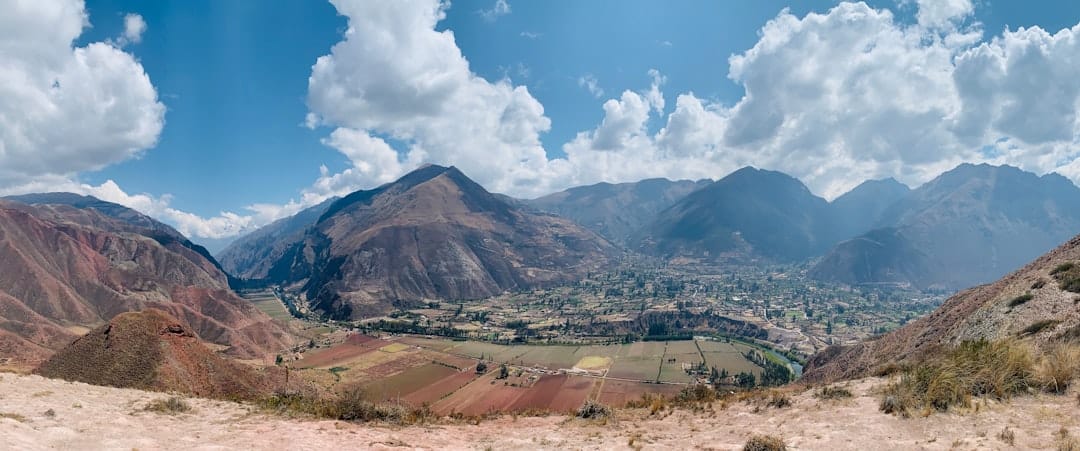
Sacred Valley of Peru

Peru Digital Nomad Visa

Peru is developing a dedicated Digital Nomad visa to attract remote workers from around the world. While specific regulations are still pending, Peru's affordable cost of living, reliable internet infrastructure in major cities, and vibrant culture make it a top destination for location-independent professionals.

TBD
Last Updated: February 2026

Why Choose PeruVisas?

English-Speaking TeamYes
Countries Served50+
Processing TimeTBD
Full SupportYes

Requirements Checklist

Valid passport with at least 6 months remaining validity
Proof of remote employment or freelance income from outside Peru
Expected minimum monthly income requirement (likely $1,500-2,500 USD based on regional trends)
Health insurance with coverage valid in Peru
Criminal background check from country of origin
Proof of accommodation in Peru or sufficient funds for housing
Employment contract or client contracts demonstrating remote work arrangement
Bank statements showing consistent income over 3-6 months

Key Benefits

Legal authorization to reside in Peru while working remotely
Expected duration of 1-2 years (based on regional precedents)
No requirement to pay Peruvian income tax on foreign-sourced income (expected)
Access to Peru's affordable cost of living
Ability to open local bank accounts and sign rental contracts
Freedom to travel within Peru and neighboring countries
Access to growing coworking and digital nomad infrastructure
Potential path to other visa categories if you decide to stay long-term

Current Status of Peru's Digital Nomad Visa

As of early 2026, Peru does not yet have a formally enacted Digital Nomad visa. However, the Peruvian government has been actively studying the models adopted by neighboring countries and has indicated interest in creating a dedicated visa category for remote workers.

Several factors are driving this initiative:

  • The success of Colombia's digital nomad visa (Visa Tipo V - Nomada Digital), launched in 2022, which has attracted thousands of remote workers
  • Ecuador's launch of its own digital nomad visa program
  • Brazil's digital nomad visa, which has been operational since 2022
  • Growing recognition that remote workers contribute to local economies without competing for local jobs
  • Peru's existing infrastructure and lifestyle advantages that already attract digital nomads informally

The regulatory framework is expected to be formalized through Migraciones and the Ministry of Foreign Affairs. When details are announced, this page will be updated with confirmed requirements and procedures.

What to Expect

Based on digital nomad visa programs across Latin America and the signals from Peruvian authorities, here is what the program will likely include:

Income Requirements Most countries set a minimum monthly income threshold to ensure applicants can sustain themselves without accessing local social services. Peru's threshold is expected to be in the range of $1,500-2,500 USD per month, competitive with Ecuador and below Colombia's higher bar.

Duration Regional precedents suggest a 1 to 2-year visa, potentially with a single renewal. Colombia offers up to 2 years, Brazil grants up to 1 year with renewal, and Ecuador provides a 2-year term.

Tax Treatment The most attractive feature of digital nomad visas is typically a tax exemption on foreign-sourced income. Peru is expected to follow this model, meaning your remote work income from non-Peruvian clients or employers would not be subject to Peruvian income tax. You would remain responsible for taxes in your home country.

Work Restrictions The visa would authorize remote work for foreign companies and clients only. Working for a Peruvian company or serving Peruvian clients locally would likely require a standard work visa.

Current Alternatives for Remote Workers

Until the dedicated Digital Nomad visa launches, here are your options for living and working remotely in Peru:

Tourist Visa (Up to 183 Days)

Most nationalities receive 183 days (approximately 6 months) upon entry to Peru, which is one of the most generous tourist visa periods in South America. While the tourist visa does not technically authorize work of any kind, enforcement regarding remote work performed for foreign employers has historically been minimal.

Pros: No application required for most nationalities, generous duration, easy to obtain Cons: Not technically legal for any work, no path to residency, cannot open bank accounts easily, must leave and re-enter for a new period

Rentista Visa

If you have passive income of at least $1,000 USD per month, the Rentista visa is a legitimate long-term option. Some digital nomads with investment income, rental properties, or other passive revenue streams qualify for this category.

Pros: Legal residency, path to permanent residency, bank accounts, full legal standing Cons: Requires genuinely passive income (not freelance earnings), does not authorize active work

Independent Professional Visa

For freelancers and consultants with recognized professional qualifications, the Independent Professional visa (Profesional Independiente) may be an option. This requires membership in a Peruvian professional body but allows self-employment.

Pros: Legal work authorization, residency status, path to permanent residency Cons: Requires Peruvian professional body membership, more complex application

Business Visitor

For short stays involving meetings, conferences, or business development (but not productive work), a business visitor status within the tourist visa framework may apply.

Why Peru is Ideal for Digital Nomads

Cost of Living

Peru offers exceptional value for remote workers. A comfortable lifestyle in Lima's Miraflores or Barranco districts costs $1,500-2,500 USD per month including a modern apartment, coworking membership, dining out, and entertainment. In smaller cities like Cusco or Arequipa, costs drop to $1,000-1,800 USD per month.

Internet Infrastructure

Lima's internet infrastructure has reached modern standards, with fiber-optic connections of 100-300+ Mbps available in most neighborhoods. Major providers include Movistar, Claro, and Entel. Cusco and Arequipa offer reliable connections of 50-100 Mbps in urban areas. Coworking spaces throughout the country provide consistent high-speed connections with backup systems.

Coworking Spaces

The coworking ecosystem in Peru has matured significantly:

  • Lima: Comunal, WeWork, Regus, and numerous independent spaces in Miraflores, San Isidro, and Barranco. Day passes run $10-20 USD; monthly memberships $100-250 USD.
  • Cusco: Several nomad-friendly spaces including Selina, and local coworking centers with mountain views
  • Arequipa: Growing options including shared office spaces catering to the small but dedicated nomad community

Food and Culture

Peru's culinary scene is world-renowned. From ceviche and lomo saltado to innovative fusion cuisine, eating well in Peru is both affordable and extraordinary. A quality lunch menu (menu del dia) at a local restaurant costs $2-4 USD. Fine dining in Lima's top restaurants remains accessible compared to equivalent quality elsewhere.

Time Zone Advantage

Peru operates on Peru Time (PET, UTC-5), which aligns closely with U.S. Eastern Time and overlaps substantially with U.S. Central, Mountain, and Pacific time zones. This makes real-time collaboration with North American teams straightforward, a significant advantage over Southeast Asian or European nomad destinations for workers serving U.S. clients.

Comparison to Other LATAM Digital Nomad Visas

Feature Peru (Expected) Colombia Ecuador Brazil
Income Requirement ~$1,500-2,500/mo ~$3,000/mo ~$1,375/mo ~$1,500/mo
Duration 1-2 years (est.) Up to 2 years Up to 2 years 1 year + renewal
Tax on Remote Income Exempt (expected) Exempt Exempt Exempt (first year)
Internet Quality Good (major cities) Very Good Moderate Very Good
Cost of Living Low-Moderate Low-Moderate Low Moderate
Nomad Community Size Growing Large (Medellin) Moderate Large (Florianopolis)
Safety (Major Cities) Moderate Moderate Moderate Varies

Preparing for the Launch

If you are considering Peru as your next remote work destination, here are steps you can take now:

  1. Organize your financial documentation: Bank statements, employment contracts, and client agreements showing consistent remote income
  2. Obtain an apostilled criminal background check: This is universally required and can take weeks to process
  3. Secure health insurance: Get international health insurance that explicitly covers Peru
  4. Research neighborhoods: Explore Miraflores, Barranco, and San Isidro in Lima, or consider Cusco and Arequipa for a different pace
  5. Join online communities: Facebook groups and forums for digital nomads in Peru provide real-time information about the visa landscape
  6. Consult an immigration attorney: A Peruvian immigration lawyer can advise you on the best current option and help you prepare for the digital nomad visa when it launches

Frequently Asked Questions

As of early 2026, Peru's dedicated Digital Nomad visa is still in the regulatory development phase. The Peruvian government has signaled interest in creating this visa category following the success of similar programs in Colombia, Ecuador, Brazil, and other Latin American countries. No official launch date has been confirmed. We will update this page as new information becomes available.
Yes, but through other channels. Most remote workers currently use Peru's tourist visa (up to 183 days) or apply for a Rentista visa if they have qualifying passive income. The tourist visa does not technically authorize work, but enforcement around remote work for foreign employers has been minimal. The Rentista visa is a more secure option for longer stays.
Based on comparable digital nomad visa programs in the region, Peru's requirement is expected to fall between $1,500 and $2,500 USD per month. Colombia requires approximately $3 times minimum wage (~$3,000 USD), while Ecuador's program targets around $1,375 USD. Peru is likely to set its threshold competitively.
Based on how other Latin American digital nomad visas are structured, it is likely that Peru's program will exempt foreign-sourced remote income from Peruvian taxation. However, you will still be responsible for tax obligations in your home country. Consult a tax professional familiar with international taxation for your specific situation.
Lima (especially Miraflores and Barranco districts) is the most popular choice with the best internet infrastructure, coworking spaces, and amenities. Cusco and Arequipa are also excellent options with growing nomad communities, lower costs, and stunning surroundings. Huancayo and Trujillo are emerging options for those seeking authentic Peruvian experiences at very low cost.
Internet quality in Peru's major cities has improved dramatically. Lima offers fiber-optic connections with speeds of 100-300+ Mbps in many areas. Cusco, Arequipa, and Trujillo have reliable connections of 50-100 Mbps. Rural and remote areas remain limited. Coworking spaces consistently offer high-speed, reliable connections.

GET STARTED

Book Your Free Consultation

Get expert guidance on your Peru visa options within 24 hours.

By submitting this form, you agree to our privacy policy. We'll never share your information.