Peru vs Ecuador for Retirement: Which Is Better in 2026?
Back to Blog

Peru vs Ecuador for Retirement: Which Is Better in 2026?

February 7, 2026PeruVisasRetirementUpdated February 2026

Two Countries, One Question

Peru and Ecuador share a border, a colonial heritage, and a reputation as top retirement destinations in South America. Both offer dramatic landscapes, affordable living, and welcoming cultures. But they are fundamentally different countries with different strengths.

This guide compares them honestly across every category that matters to retirees. There is no single "winner" — the right choice depends on your priorities, budget, and lifestyle preferences.

Visa Requirements

Peru: Rentista Visa

Peru's rentista visa requires proof of $1,000 USD per month in passive income (plus $500 per dependent). It grants one-year renewable residency with a path to permanent residency after three years.

Key features:

  • $1,000/month income threshold
  • Social Security, pensions, and investment income qualify
  • FBI background check required (US citizens)
  • Documents must be apostilled and translated
  • Processing time: 30-60 business days
  • Annual renewal required for first three years
  • Permanent residency after three years

Ecuador: Retirement Visa (Jubilado)

Ecuador's jubilado visa requires proof of $1,475 USD per month in pension or Social Security income (as of 2026). This threshold is tied to Ecuador's minimum wage and adjusts periodically.

Key features:

  • $1,475/month income threshold (higher than Peru)
  • Only pension and Social Security income qualify (not investment income)
  • FBI background check required (US citizens)
  • Documents must be apostilled and translated
  • Processing time: 30-45 business days
  • Visa is valid for two years, then renewable
  • Permanent residency available after 21 months

Verdict

Peru wins on accessibility. Its $1,000/month threshold is $475 lower than Ecuador's, and it accepts a broader range of income sources. For retirees with modest Social Security benefits, Peru is the easier entry point.

Cost of Living

Both countries are affordable, but the details differ.

Category Peru (Mid-Range) Ecuador (Mid-Range)
1BR rent (major city) $400-$700 $500-$800
Groceries (monthly) $200-$300 $250-$350
Dining out (meal for two) $12-$25 $15-$30
Doctor visit $20-$50 $25-$50
Domestic beer (restaurant) $1.50-$3 $2-$4
Internet (monthly) $20-$35 $30-$45
Gasoline (per gallon) $4.50 $2.50 (subsidized)
Monthly total (single, comfortable) $1,000-$1,600 $1,200-$1,800

Peru is generally 10-20% cheaper than Ecuador for equivalent lifestyles, particularly in housing and food. Ecuador's advantage is subsidized gasoline and electricity, which benefit those who drive or use air conditioning.

Within each country, location matters enormously. Living in Lima's Miraflores is more expensive than Cuenca, Ecuador's popular expat hub. But living in Arequipa or Trujillo, Peru, is cheaper than either.

Verdict

Peru has a slight edge on overall cost of living, especially outside Lima. Ecuador's costs have risen faster in recent years due to dollarization (Ecuador uses the US dollar as its official currency).

Currency

This is a significant practical difference:

  • Peru uses the Peruvian sol (PEN), which floats against the dollar. Exchange rate risk exists, but the sol has been remarkably stable. The upside: when the sol weakens against the dollar, your purchasing power increases.
  • Ecuador uses the US dollar. No exchange rate risk, no conversion fees, no currency confusion. What you see is what you pay.

Verdict

Ecuador wins on simplicity. Using the US dollar eliminates an entire category of financial friction. However, Peru's stable sol and lower base prices offset the convenience of dollarization.

Healthcare

Both countries offer quality private healthcare at prices that shock Americans accustomed to US hospital bills.

Peru

Peru's private healthcare system is concentrated in Lima, where hospitals like Clínica Ricardo Palma, Clínica Anglo Americana, and Clínica San Felipe rival any in Latin America. Major cities like Arequipa and Cusco have good private clinics. Rural healthcare is basic.

  • Private insurance: $150-$350/month
  • Public system (EsSalud): Available to residents
  • Specialist availability: Excellent in Lima, good in Arequipa, limited elsewhere
  • Dental care: Very affordable, high quality in major cities
  • Pharmacies: Most medications available without prescription, at 30-70% less than US prices

Ecuador

Ecuador's private healthcare is similarly strong, with Cuenca and Quito offering the best facilities. Hospital Vozandes in Quito and Hospital del Rio in Cuenca are popular with expats. Ecuador's public system, IESS, is available to visa holders and includes comprehensive coverage.

  • Private insurance: $150-$300/month
  • Public system (IESS): Mandatory enrollment for visa holders, covers most services
  • Specialist availability: Excellent in Quito and Cuenca, limited elsewhere
  • Dental care: Very affordable, slightly cheaper than Peru
  • Pharmacies: Similar pricing to Peru

Verdict

Roughly tied. Peru has more top-tier facilities in Lima, while Ecuador's IESS public system is arguably more comprehensive and accessible. Both are dramatically cheaper than the US.

Climate

Peru

Peru's geography creates extreme climate diversity:

  • Lima: Desert coast, overcast and cool from May to November (garúa season), warm and sunny December to April. Temperature: 15-28°C (59-82°F).
  • Arequipa: High desert, dry and sunny year-round. Temperature: 10-25°C (50-77°F).
  • Cusco: Highland, cold nights (0-5°C), mild days (15-20°C). Rainy season November to March.
  • Northern coast (Trujillo): Warm and sunny year-round. Temperature: 18-30°C (64-86°F).

Ecuador

Ecuador sits on the equator, so seasons are defined by rainfall, not temperature:

  • Cuenca: Spring-like year-round, 12-22°C (54-72°F). Rainy season January to April.
  • Quito: Similar to Cuenca but slightly cooler at higher altitude. 10-20°C (50-68°F).
  • Guayaquil and coast: Hot and humid, 25-35°C (77-95°F) year-round.
  • Vilcabamba: Subtropical valley, mild temperatures, lush green.

Verdict

Depends entirely on your preference. Peru offers more climate diversity (you can find almost any climate within its borders), while Ecuador's highland cities offer the most consistent "eternal spring" weather. If you hate cold, Peru's northern coast or Ecuador's Vilcabamba are strong choices.

Safety

Neither country is dangerous for expats who exercise normal urban precautions, but both have areas to avoid.

Peru's crime concerns center on petty theft in tourist areas (Lima, Cusco) and some provinces affected by drug trafficking. Lima's upscale districts (Miraflores, San Isidro, Barranco) are well-policed and quite safe.

Ecuador has experienced a significant increase in violent crime since 2022, particularly related to drug trafficking along the coast (Guayaquil, Esmeraldas). Cuenca and Quito remain relatively safe, but the security situation has deteriorated more noticeably than in Peru.

Verdict

Peru has a slight edge in 2026. While neither country is immune to crime, Peru's security situation has been more stable, and its popular expat areas maintain strong police presence.

Expat Community

Peru

Lima has a large, established international community centered in Miraflores and Barranco. Cusco attracts a younger, more transient crowd of digital nomads and spiritual seekers. Arequipa's expat community is smaller but growing steadily.

Peru's expat community is more diverse and diffuse — spread across multiple cities rather than concentrated in one hub.

Ecuador

Cuenca is the undisputed expat capital of Ecuador and arguably all of South America. An estimated 5,000-8,000 North American expats live in and around Cuenca, creating a robust infrastructure of English-speaking services, social clubs, and support networks.

Quito has a significant expat community, and Vilcabamba attracts a smaller wellness-oriented crowd.

Verdict

Ecuador wins for community density, especially in Cuenca. If having a large, established English-speaking expat network is important to you, Cuenca is hard to beat. Peru's community is growing but more spread out.

Culture and Lifestyle

Peru

Peru's cultural depth is extraordinary. From Machu Picchu to the Amazon to the world's best cuisine (Lima has been named the world's leading culinary destination multiple years running), Peru offers endless exploration.

The culture is warm but somewhat more formal than Ecuador. Limeños are cosmopolitan and increasingly bilingual. Outside Lima, life is more traditional and Spanish-dependent.

Ecuador

Ecuador is smaller and more intimate. The Galápagos Islands, the Amazon basin, and the Andean highlands are all within easy reach. Ecuadorian culture is laid-back and welcoming, and Cuenca's expat infrastructure makes daily life very easy for English speakers.

Ecuador's cuisine is good but does not reach Peru's world-class heights. The cultural offerings are genuine but less diverse than Peru's.

Verdict

Peru wins on cultural richness and diversity. Ecuador wins on ease and intimacy. Peru is a bigger adventure; Ecuador is a more comfortable landing.

Infrastructure and Connectivity

  • Peru: Better domestic flight network, faster internet (fiber widely available in cities), more international flight routes from Lima.
  • Ecuador: Smaller country means shorter travel times between cities. Cuenca's airport has limited flights; Quito and Guayaquil are the international hubs.

Both countries have reliable internet in urban areas (50-200+ Mbps fiber) and improving 4G/5G mobile networks.

Verdict

Peru has better infrastructure overall, particularly for domestic travel and international connectivity.

Summary Comparison

Factor Peru Ecuador
Visa income threshold $1,000/month $1,475/month
Cost of living Lower Slightly higher
Currency Peruvian sol US dollar
Healthcare quality Excellent (Lima) Excellent (Cuenca/Quito)
Climate options Very diverse Spring-like highlands
Safety (2026) Moderate-good Moderate (declining)
Expat community Growing, diffuse Large, concentrated
Cultural richness Exceptional Very good
Infrastructure Better Good
Food scene World-class Good

So Which Should You Choose?

Choose Peru if: You want lower visa requirements, the world's best food scene, incredible cultural diversity, and are comfortable with a less established expat community. Peru is better for adventurous retirees who want to explore.

Choose Ecuador if: You want the simplicity of the US dollar, a large and supportive English-speaking community (especially in Cuenca), and a smaller, more manageable country. Ecuador is better for retirees who prioritize ease and community.

Best advice: Visit both countries for at least two weeks each before making a decision. They are neighbors with direct flights between Lima and Quito or Guayaquil. Many retirees explore both and find that one simply "feels right."

Tags

retirementcomparisonEcuador
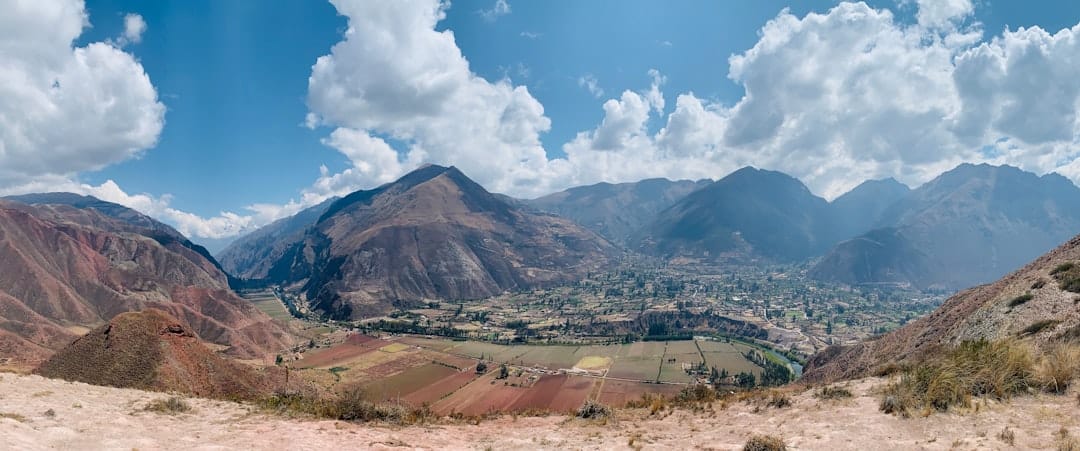
Sacred Valley of the Incas

Ready to Start Your Peru Visa?

Book a free consultation to discuss your visa options and create a personalized plan for your move to Peru.

No obligation — just honest answers about your visa options.

GET STARTED

Book Your Free Consultation

Get expert guidance on your Peru visa options within 24 hours.

By submitting this form, you agree to our privacy policy. We'll never share your information.